University of Benghazi Researchers Publish Q3-Indexed Study on Water Quality and Algal Diversity
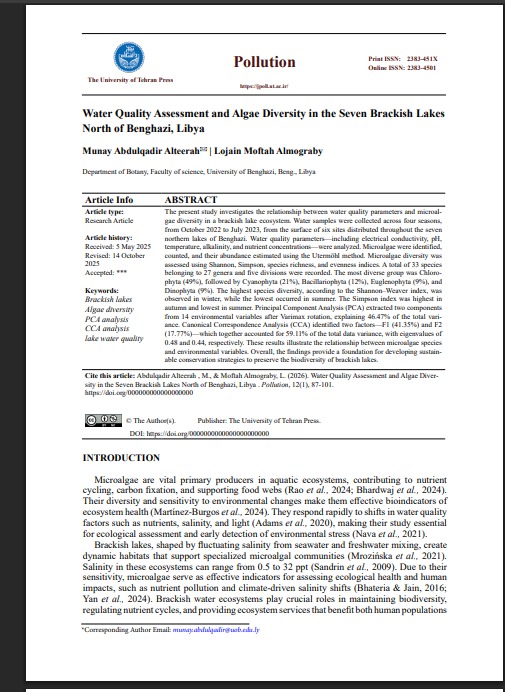
In a new academic achievement reflecting the growing research activity at the University of Benghazi, Dr Munay Abdulqadir Alteerah and Ms Lojain Moftah Almograby from the Department of Botany, Faculty of Science, have published a peer-reviewed scientific study titled:
“Assessment of Water Quality and Algal Diversity in the Seven Lakes, North Benghazi”
The study was published in the international Pollution Journal, which is indexed in both Scopus and Web of Science and classified within the Q3 category.
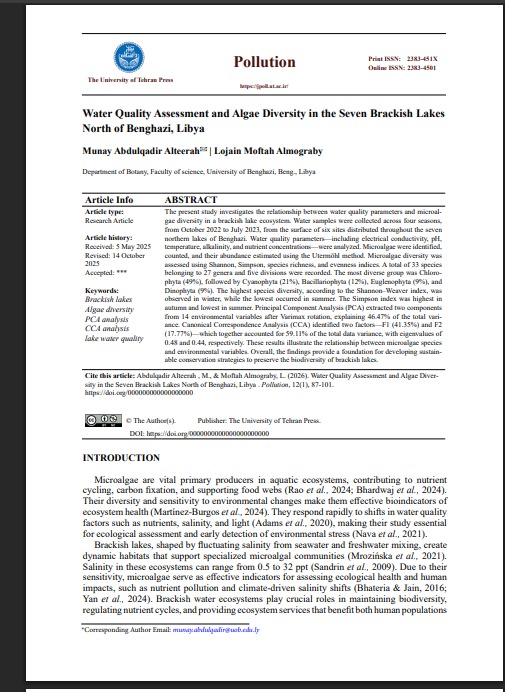
The research examined the relationship between water quality indicators and microalgae diversity in the saline lakes of Benghazi. Seasonal samples were collected from six locations between October 2022 and July 2023. The analyses covered several environmental parameters, including electrical conductivity, pH, temperature, alkalinity, and nutrient concentrations.
The researchers also identified and quantified various algal species. A total of 33 species belonging to 27 genera and five divisions were recorded. Green algae showed the highest diversity, followed by cyanobacteria, diatoms, euglenoids, and dinoflagellates.
The findings revealed clear seasonal variations in biodiversity indicators. The Shannon–Weaver index recorded its highest values during winter and its lowest during summer, while the Simpson index peaked in autumn. Multivariate statistical analyses (PCA and CCA) further demonstrated statistically significant relationships between microalgal composition and environmental variables, with these factors explaining more than half of the observed variation.
The study highlights the critical role of water quality in shaping algal diversity and provides valuable scientific data that can support sustainable conservation efforts for saline lake ecosystems in the region.
Read the full published paper:
Assessment of Water Quality and Algal Diversity in the Seven Lakes, North Benghazi (PDF)