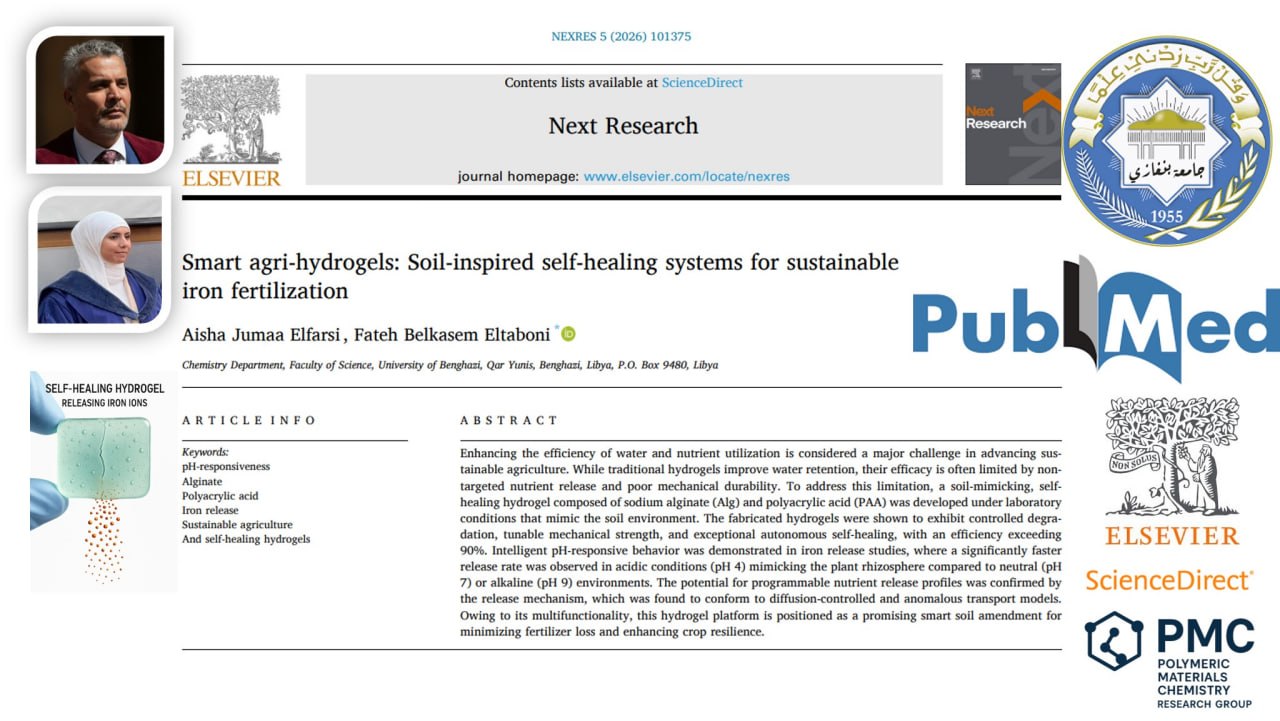
University of Benghazi Records an International Research Achievement in Polymer Materials Chemistry
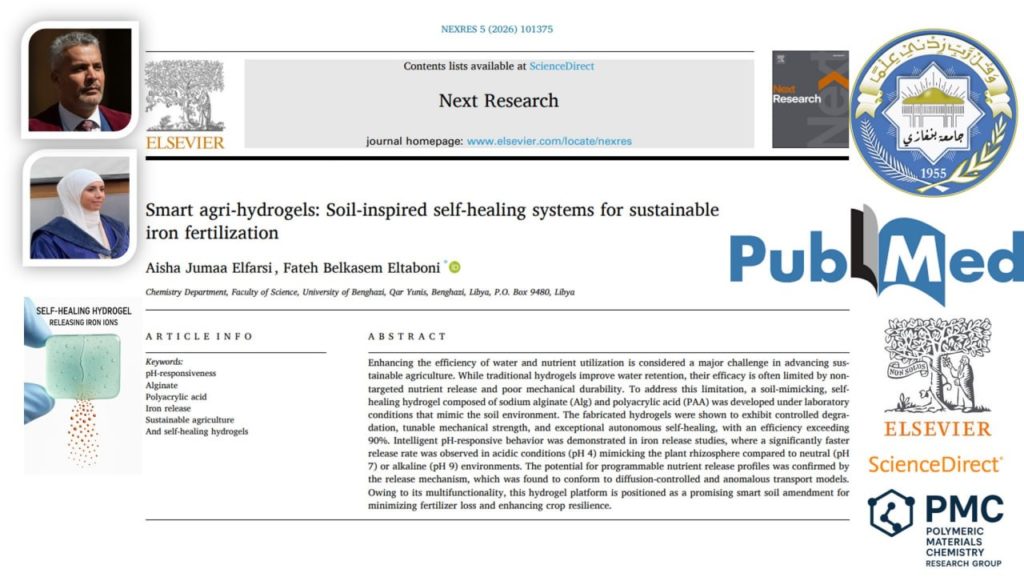
As part of its continued support for scientific research and its efforts to strengthen international academic visibility, the University of Benghazi has achieved a notable research milestone with the publication of an international paper in the field of polymer materials chemistry.
The study was conducted by researcher Aisha Al-Farsi, under the supervision and collaboration of Prof. Dr. Fathi Al-Tabouni, within the Polymer Materials Chemistry Research Group at the Department of Chemistry, Faculty of Science, University of Benghazi.
The paper was published in Next Research, a journal issued by the global publisher Elsevier, available on the ScienceDirect platform and currently indexed in PubMed, reflecting the high scientific quality and international relevance of the research.
The study focuses on the preparation of a self-healing hydrogel system capable of controlled release of iron ions. This is a contemporary and promising topic in functional polymer chemistry, with advanced pharmaceutical and medical applications, particularly in smart iron drug-delivery systems.
Notably, the research was carried out entirely in the laboratories of the University of Benghazi and forms a core part of the researcher’s Master’s thesis. This highlights the competence of postgraduate students and academic staff and their ability to produce solid research in line with internationally recognised standards.
The importance of this study lies in its contribution to opening new perspectives for using synthetic polymer structures as smart carriers for safer and more efficient iron release, helping reduce side effects and improve therapeutic outcomes. As such, it represents a valuable addition to applied research in this field.
🔗 DOI link:
https://doi.org/10.1016/j.nexres.2026.101375
🔗 Free access link (50 days – no registration required):
https://authors.elsevier.com/a/1mUlCArcH5znHI
This link provides access to the final published version via ScienceDirect until 14 March 2026.