Benghazi University and Jordaian University signed MOU to boost academic and research cooperation
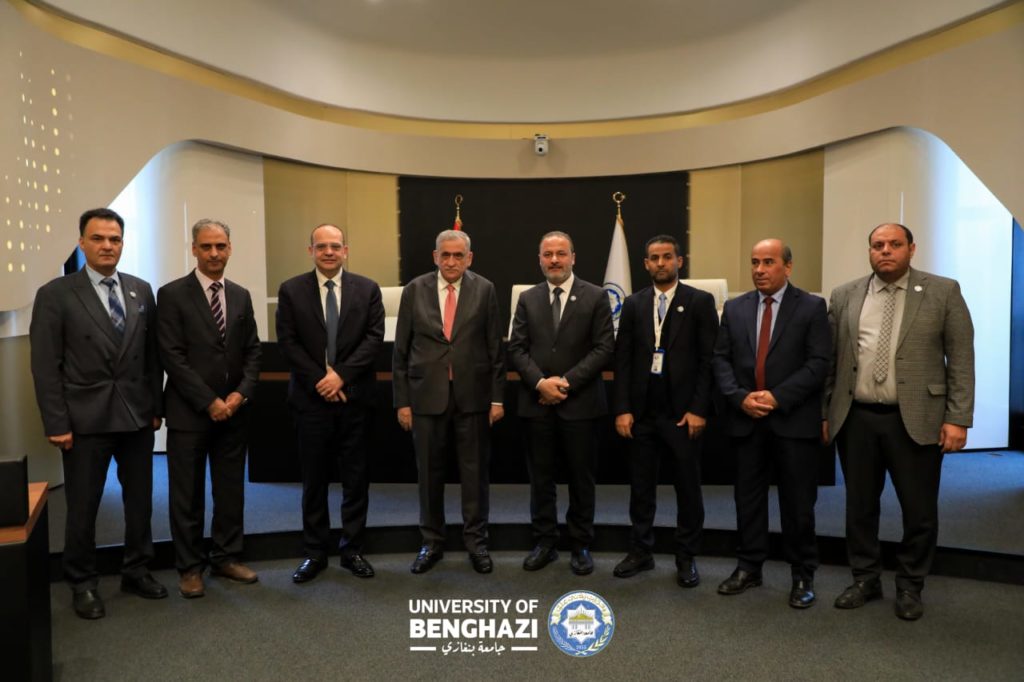
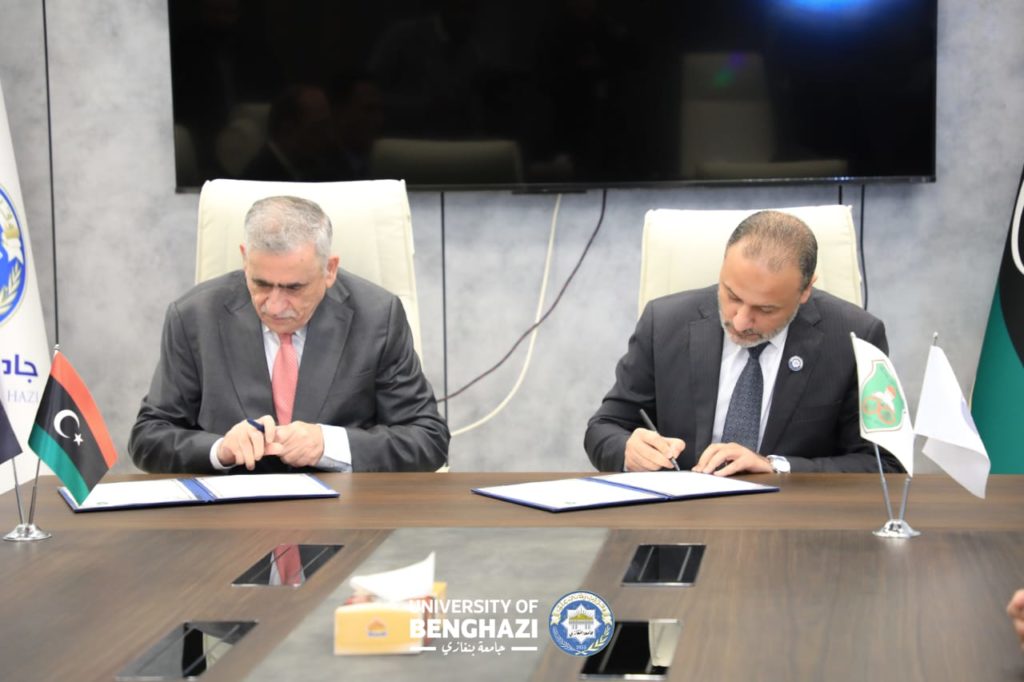
The University of Benghazi and the University of Jordan have signed a Memorandum of Understanding (MoU) aims to strengthen the scientific and Research partnership between the two institutions, contributing to the development of higher education and scientific research, and community service in both brotherly countries.
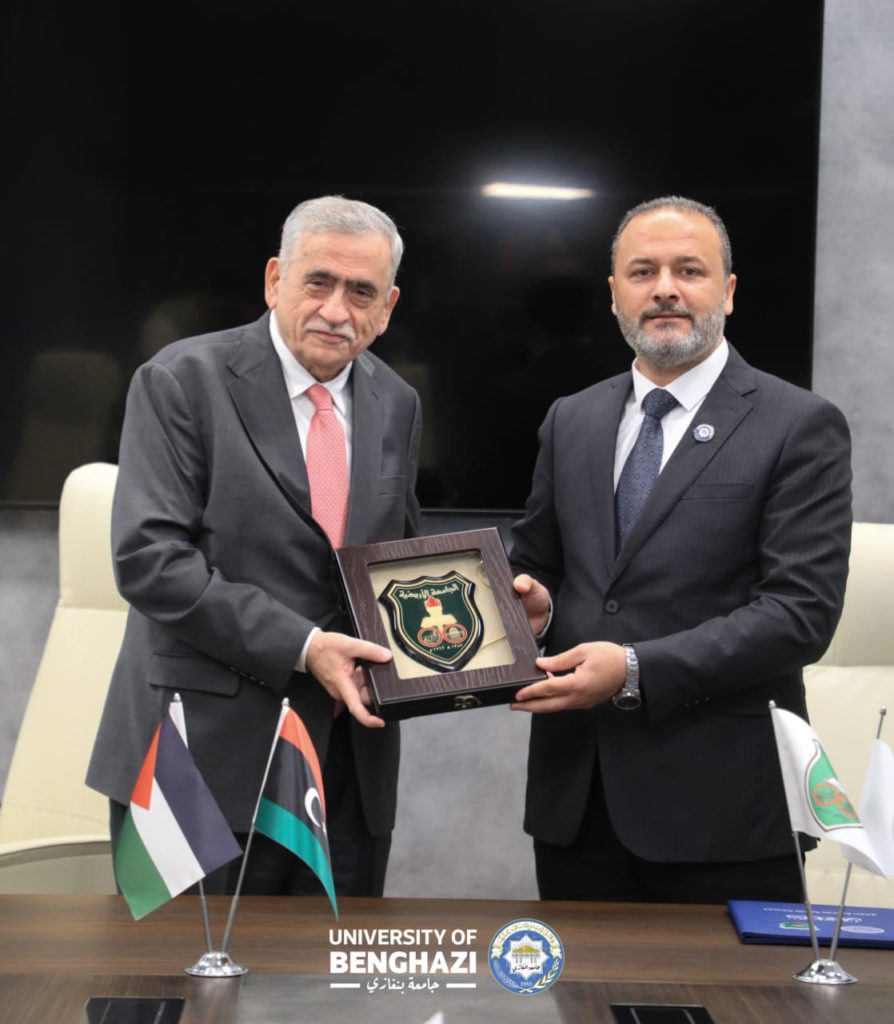
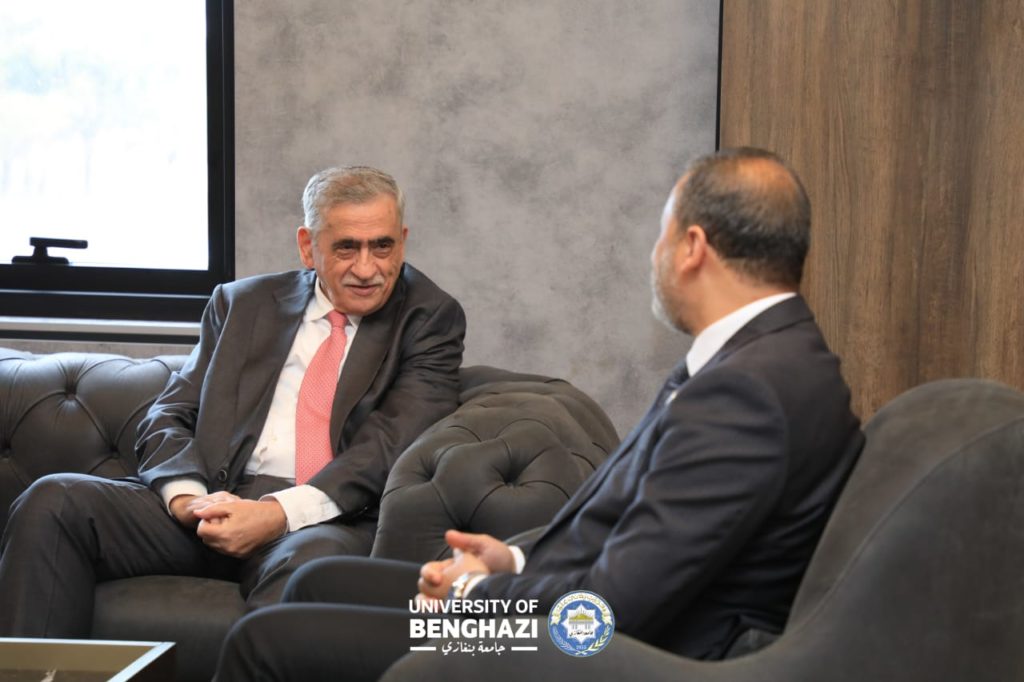
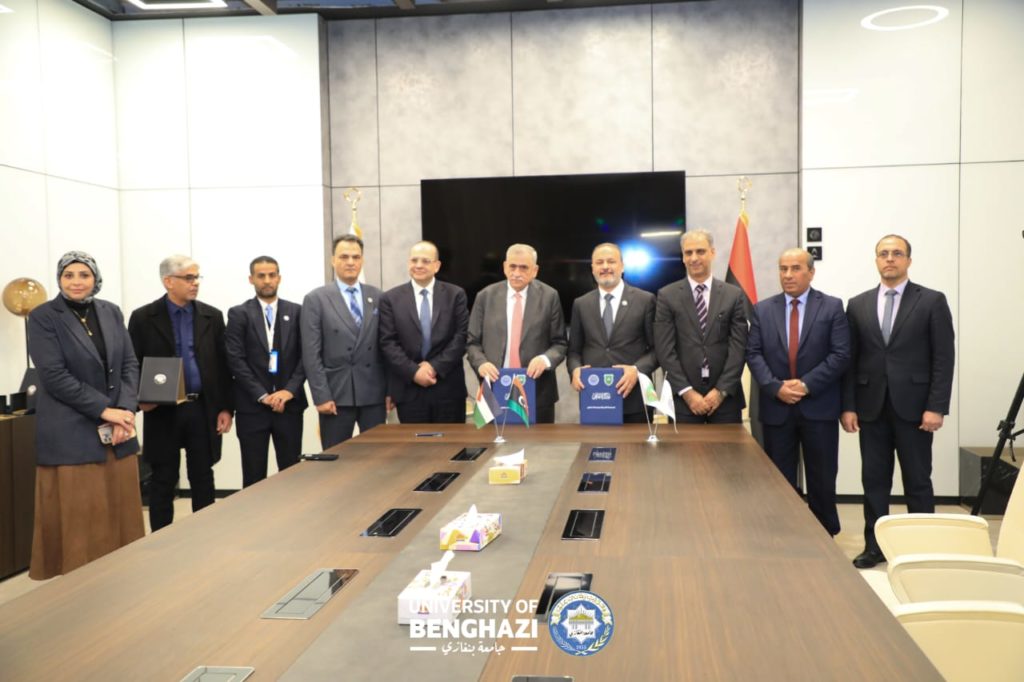
The agreement was signed by the president of the University of Jordan, Prof. Nathir Obeidat, accompanied by his deputy Prof. Asherf Abu-karaki, and the president of the University of Benghazi, prof. Ezzeddine Al-Darsi, in the presence of the following officials:
• Dr. Sleiman Rabeh, Director of Postgraduate Studies and Training
• Prof. Yahya Lamloum, Vice Consul for Environmental Affairs and Community Affairs
• Prof. Jamal Al-Areibi, Acting Vice President for Scientific Affairs
• Dr. Ahmed Saad, Director of the International Cooperation Office
• Prof. Fathi Al-Barki, Dean of the Faculty of Medicine
• Dr. Rowaida Al-Senaini, Dean of the Faculty of Pharmacy
All in an academic atmosphere that highlights the depth of Arab scientific relations and the commitment of the two universities to exchange experiences and knowledge.
The Memorandum of Understanding Stipulates cooperation in multiple areas, most notable the exchange of faculty members and researchers, the conducting joint scientific research, and the organisation of conferences, seminars, and workshops, as well as collaboration in the development of academic programmes and postgraduate studies, and exchanging students in accordance to the regulations in force at both universities.
The agreement also aims to support innovation and applied research, promote joint scientific publication, and exchange experience in the fields of quality academic accreditation, in accordance to the laws and regulations of both parties, and contributes to enhancing the outcomes of higher education.
Both parties affirmed that the signing of this memorandum represents a strategic step towards building effective and sustainable academic partnerships, opening broad horizons for future cooperation, strengthening the regional and international standing of both universities, and serving shared scientific and developmental objectives.