University of Benghazi Research Achievement in Medical Microbiology and Antimicrobial Resistance
The Department of Medical Laboratories at the Faculty of Public Health, University of Benghazi, has recorded a new research achievement in medical microbiology and antimicrobial resistance through the publication of a scientific study by Sherif Asolimany examining resistance and hypervirulence genes in Klebsiella pneumoniae isolated from hospitals in Benghazi.
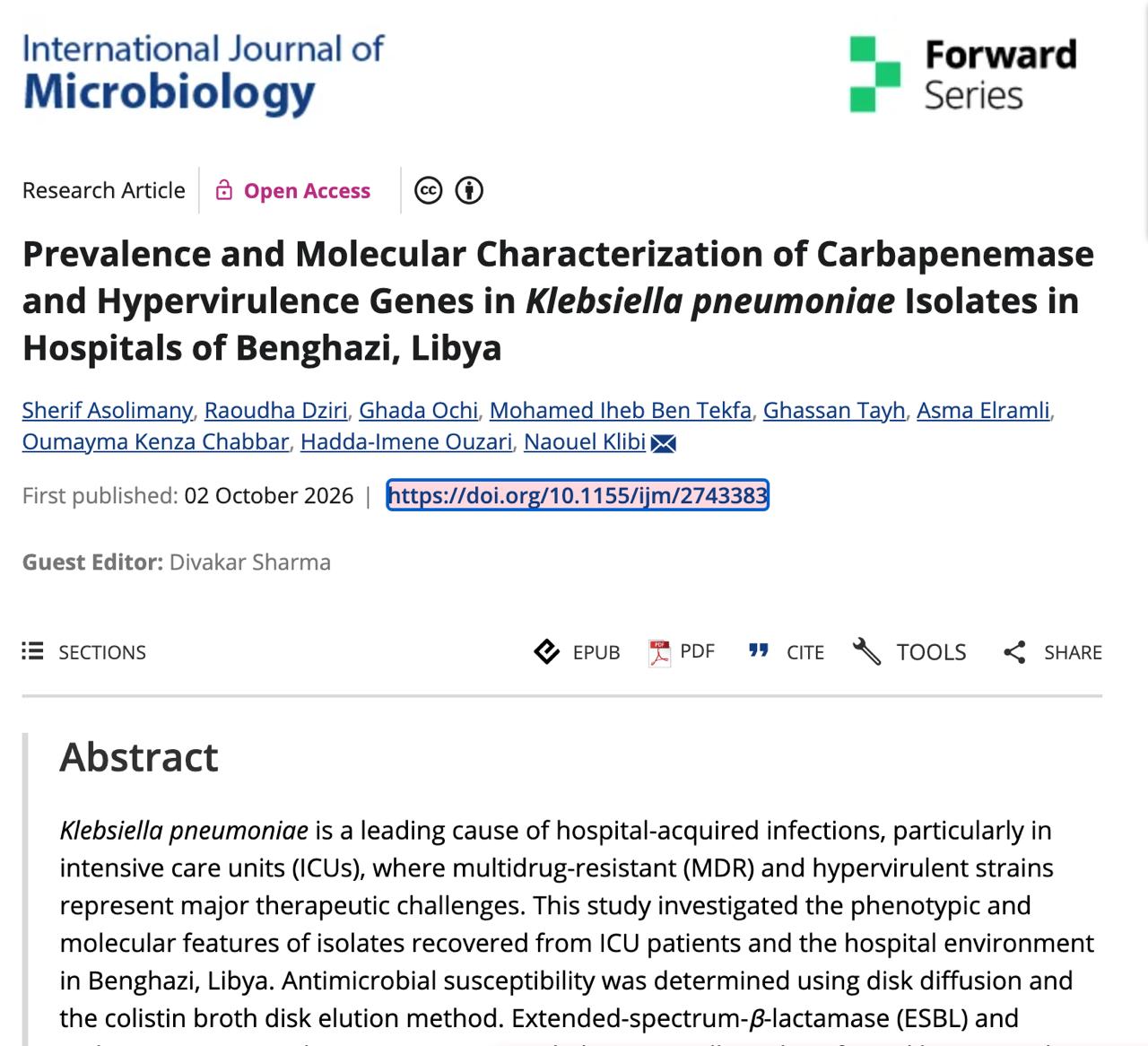
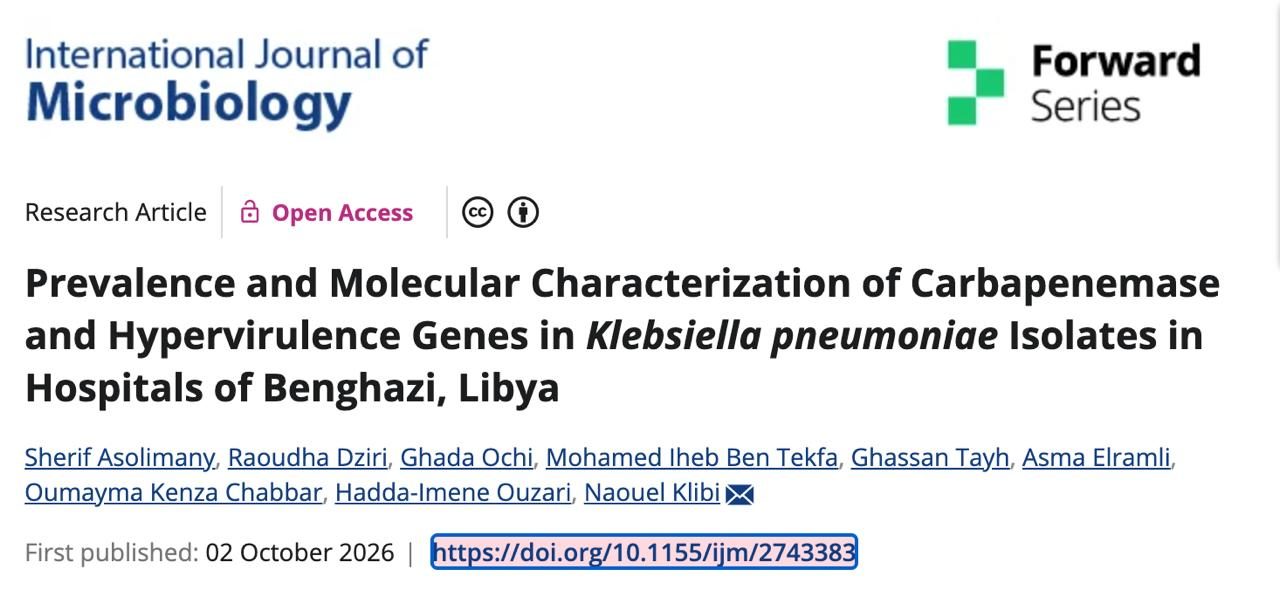
The study, published in the International Journal of Microbiology, is entitled “Prevalence and Molecular Characterization of Carbapenemase and Hypervirulence Genes in Klebsiella pneumoniae Isolates in Hospitals of Benghazi, Libya.”
The study addresses a major public health challenge: antimicrobial resistance. It focuses on Klebsiella pneumoniae, certain strains of which may combine antibiotic resistance with hypervirulence, posing significant challenges to infection treatment and control.
Investigating Antimicrobial Resistance in Klebsiella pneumoniae
The research investigates and molecularly characterises carbapenemase and hypervirulence-associated genes in Klebsiella pneumoniae isolates collected from hospitals in Benghazi, providing scientific data on their characteristics, resistance patterns, and virulence factors.
Supporting Infection Control and Public Health in Benghazi
The findings support efforts to improve infection control and address antimicrobial resistance while providing locally relevant data that can enhance understanding of bacterial infection and resistance patterns in healthcare settings in Benghazi.
This achievement also highlights the broader role of the Department of Medical Laboratories at the Faculty of Public Health, extending beyond the education of specialised professionals to applied scientific research addressing health issues of direct relevance to the community and advancing the Faculty’s academic and research presence locally and internationally.