University of Benghazi Professor Presents Research on Inclusive Digital Media
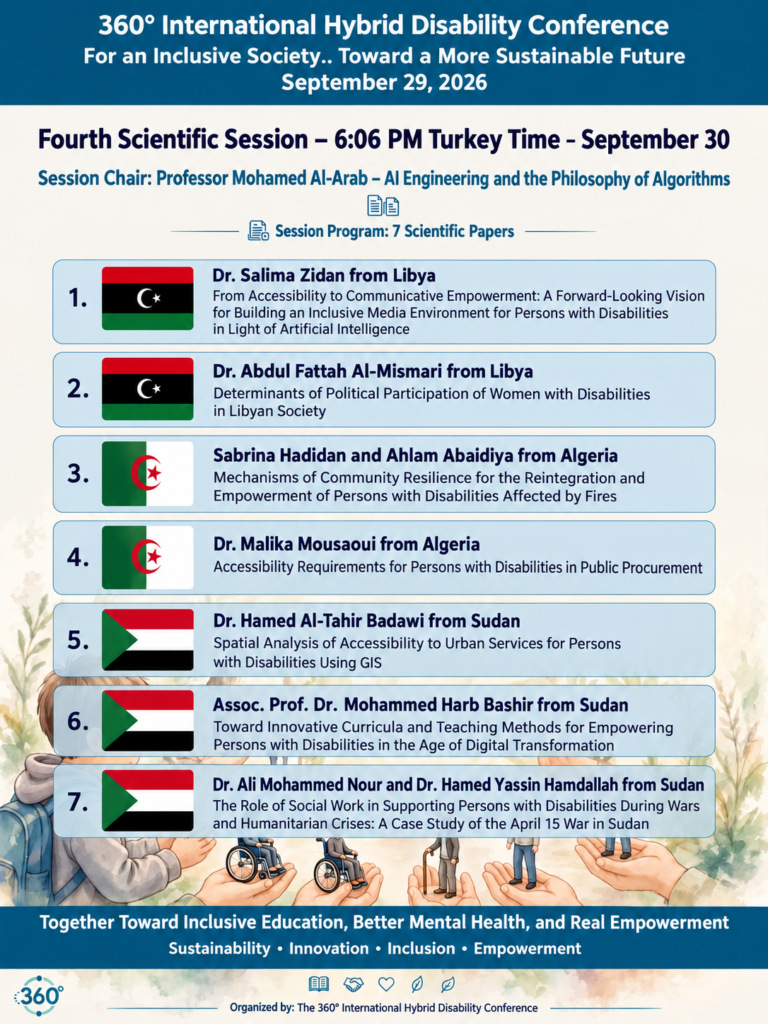
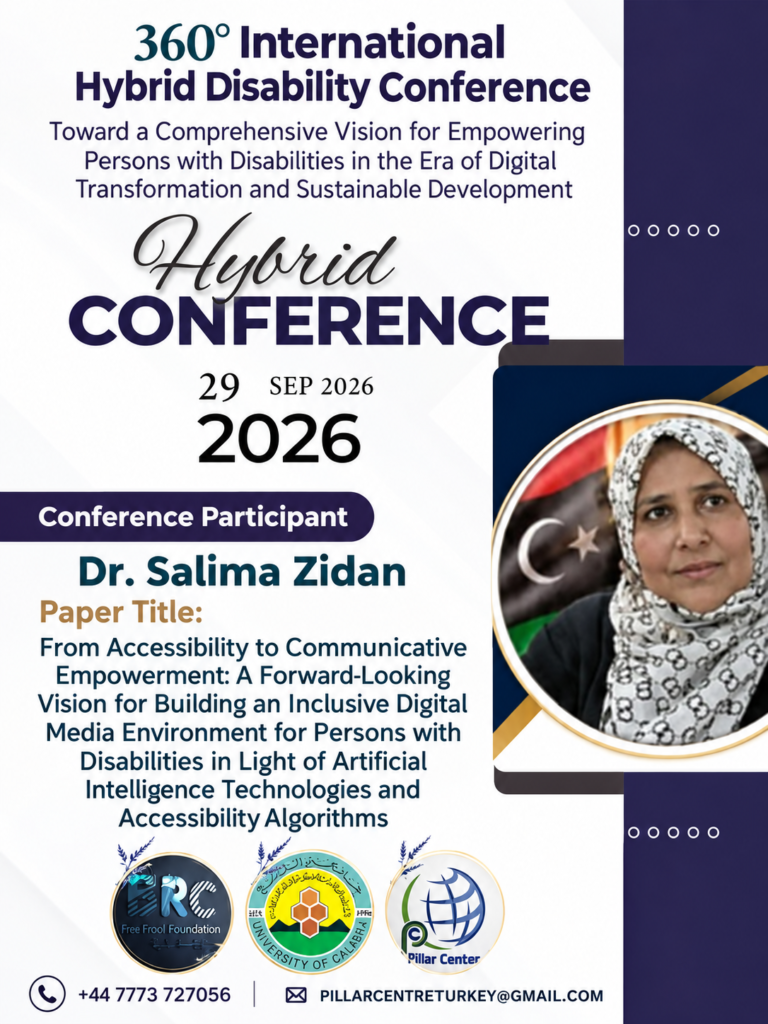
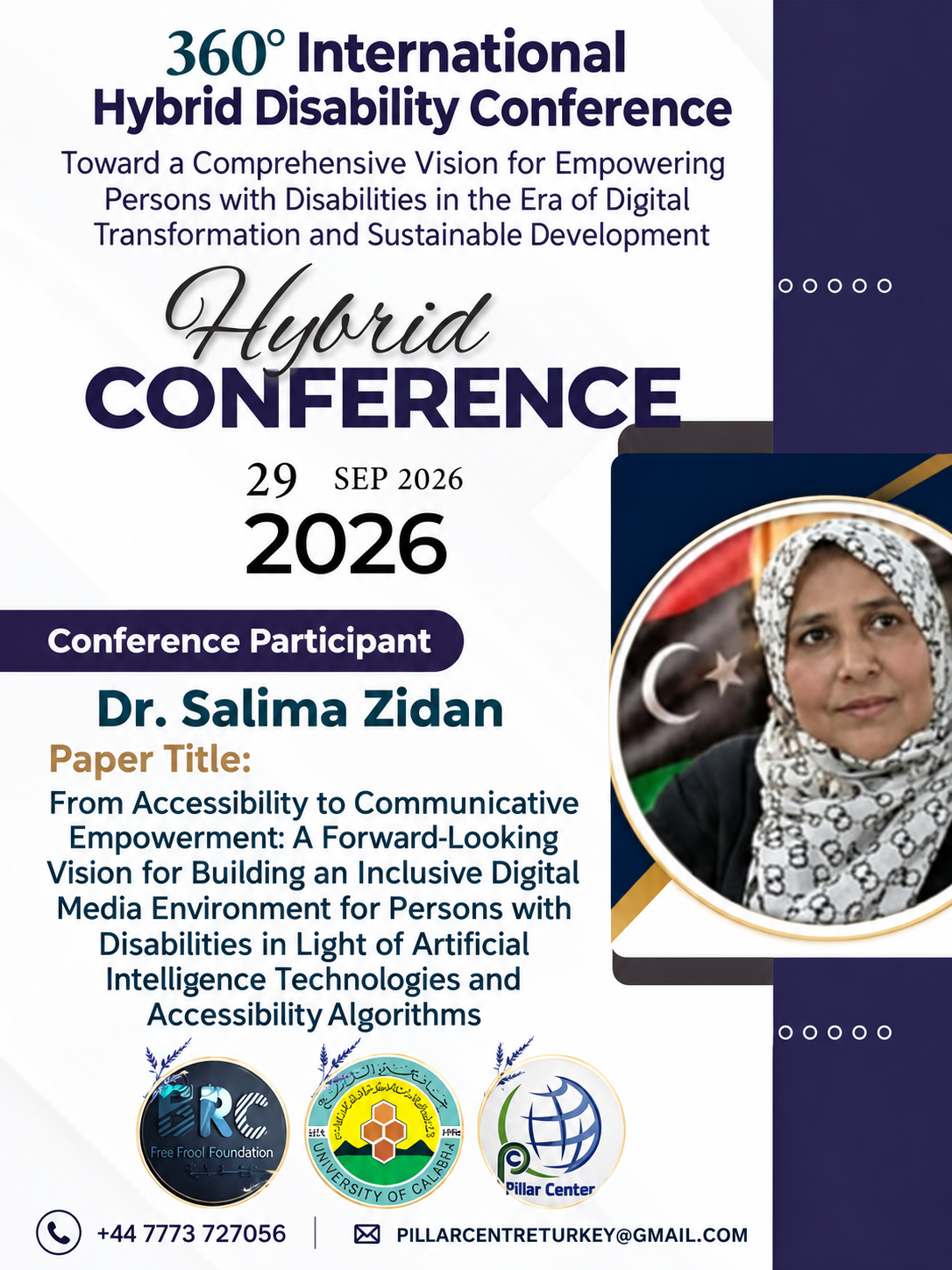
Professor Salima Hassan Zidan, a faculty member at the Faculty of Media, University of Benghazi, participated in the international “Disability 360” Conference, presenting research on inclusive digital media, communication accessibility, and the empowerment of persons with disabilities in digital media environments.
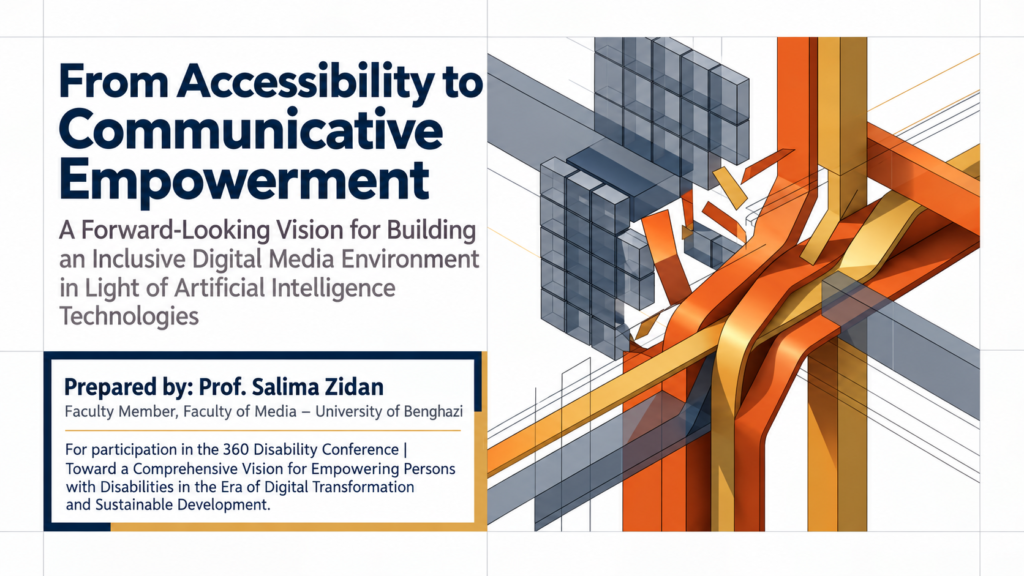
Professor Zidan delivered a scientific presentation entitled “From Accessibility to Communication Empowerment: A Forward-Looking Vision for Building an Inclusive Digital Media Environment.”
University of Benghazi Participation in the Disability 360 Conference
The conference was held under the patronage of the Minister of Higher Education and Scientific Research of the Republic of Sudan, in cooperation with the University of Dilling, the Bilar Centre for Scientific Research and Crisis Management, and BRC Foundation.
From Digital Accessibility to Communication Empowerment
Professor Zidan’s presentation introduced an approach that moves beyond the traditional concept of communication accessibility, which often focuses on assistive features such as text enlargement, sign language, and alternative text. Instead, it emphasised a broader model based on communication empowerment, active participation, and media production.
Artificial Intelligence and Inclusive Digital Media
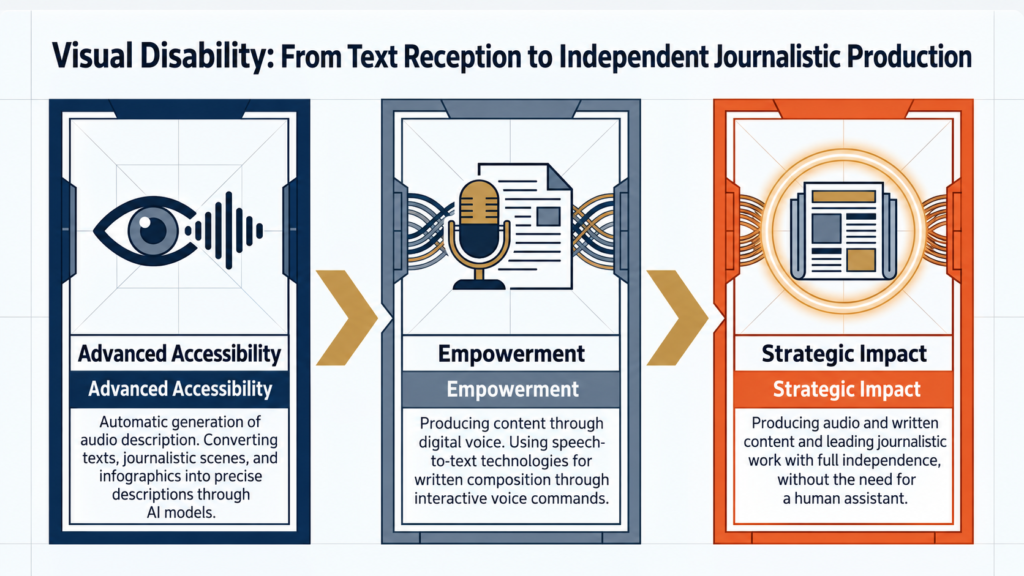
The presentation explored ways to enable persons with disabilities to move from being consumers of media content to becoming content creators, media producers, and influential participants in the digital media landscape. It also examined the potential of generative artificial intelligence and communication-platform algorithms to help bridge communication gaps and create a more inclusive digital environment.
Professor Zidan also discussed the use of digital journalism tools and artificial intelligence technologies to enable persons with disabilities to produce news stories and media content. The presentation concluded by proposing a strategic model for digital media empowerment in which accessibility serves as a starting point for participation, content creation, and meaningful engagement in the media sphere.